
There’s something magical about sitting at Café du Monde in New Orleans, sipping a cup of coffee while biting into a warm, pillowy beignet. The powdered sugar dusting your hands, the aroma of freshly fried dough—it’s an experience that stays with you long after the last bite.
I remember my first visit to the iconic café like it was yesterday. The bustling atmosphere, the laughter, and the taste of those golden treats made me fall in love with this New Orleans classic. Now, I’m excited to share my version of this delightful recipe so you can bring a piece of that magic into your own kitchen.
This recipe is perfect for breakfast or dessert, and it’s surprisingly simple to make. With just a few authentic ingredients and a little patience, you can recreate the nostalgic flavors of Café du Monde at home. Let’s get started!
Key Takeaways
- Experience the taste of New Orleans with this authentic recipe.
- Perfect for both breakfast and dessert occasions.
- Uses simple, authentic ingredients for the best flavor.
- Recreate the iconic Café du Monde experience at home.
- Enjoy the nostalgic taste of freshly fried, powdered sugar-dusted treats.
Recipe Overview
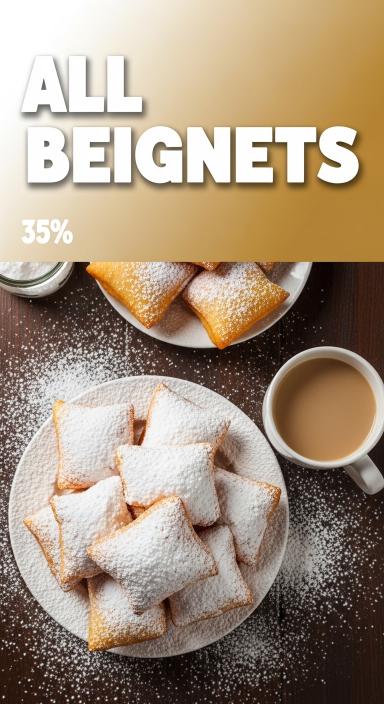
Beignets are light and fluffy fried pastries that originated in France and became famous in New Orleans cuisine. These square-shaped doughnuts are deep-fried until golden and generously dusted with powdered sugar. Beignets have a soft interior and slightly crisp exterior, making them perfect for breakfast, dessert, or a sweet snack served with coffee.
Prep Time
20 minutes
Rise Time
1 hour 30 minutes
Cook Time
10 minutes
Total Time
2 hours
Servings
24 beignets
Cuisine
French / New Orleans
Difficulty
Medium
Ingredients
For the Dough
- ¾ cup warm water (about 110°F / 43°C)
- 2¼ teaspoons active dry yeast (1 packet)
- ¼ cup granulated sugar
- ½ cup evaporated milk
- 1 large egg
- 2 tablespoons unsalted butter, melted
- ½ teaspoon salt
- 3½ cups all-purpose flour
For Frying
- Vegetable oil for deep frying
For Topping
- 1 cup powdered sugar
Equipment Needed
Kitchen Tools
- Large mixing bowl
- Rolling pin
- Deep pot or fryer
- Slotted spoon
- Thermometer (optional)
- Paper towels
- Cooling rack
Instructions
Step 1: Activate the Yeast
In a large mixing bowl combine the warm water, yeast, and a teaspoon of the sugar. Stir gently and allow it to sit for 5–10 minutes until foamy.
Step 2: Prepare the Dough
Add the remaining sugar, evaporated milk, egg, melted butter, and salt to the yeast mixture. Stir until combined.
Gradually add the flour and mix until a soft dough forms.
Step 3: Knead the Dough
Transfer the dough to a lightly floured surface and knead for 6–8 minutes until smooth and elastic.
Step 4: First Rise
Place the dough in a lightly greased bowl and cover with a clean towel.
Let the dough rise in a warm place for about 1½ hours, or until doubled in size.
Step 5: Roll and Cut the Dough
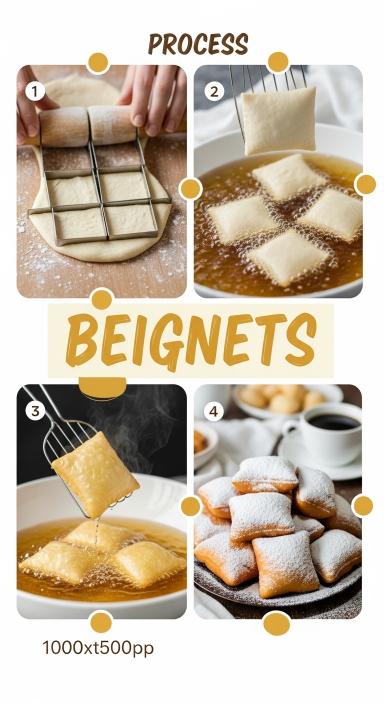
Punch down the dough and roll it out on a floured surface to about ¼ inch thickness.
Cut the dough into 2-inch squares using a knife or pizza cutter.
Step 6: Heat the Oil
Heat vegetable oil in a deep pot to 350°F (175°C).
Step 7: Fry the Beignets
Carefully place several dough squares into the hot oil.
Fry for 1–2 minutes per side until golden brown and puffed.
Remove with a slotted spoon and place on paper towels to drain.
Step 8: Add Powdered Sugar
While still warm, generously dust the beignets with powdered sugar.
Step 9: Serve
Serve immediately while warm with coffee or hot chocolate.
Serving Suggestions
Best Ways to Serve
Beignets are traditionally served warm with a generous dusting of powdered sugar.
Drink Pairings
They pair well with:
- Coffee
- Café au lait
- Hot chocolate
- Milk
Pro Tips
Maintain Oil Temperature
Keep the oil around 350°F to ensure the beignets cook evenly and do not absorb too much oil.
Do Not Overcrowd the Pot
Fry the beignets in small batches to maintain the oil temperature.
Serve Fresh
Beignets taste best when served immediately after frying.
Storage
Room Temperature
Beignets are best eaten fresh but can be stored in an airtight container for up to 1 day.
Reheating
Warm them briefly in the oven at 300°F (150°C) before serving.
Nutrition Information (Approximate Per Serving)
Calories
210 kcal
Carbohydrates
28 g
Protein
4 g
Fat
9 g
Sugar
10 g
Ingredients and Tools for Perfect Beignets
Creating the perfect beignet starts with the right ingredients and tools. Each component plays a crucial role in achieving that light, airy texture and golden finish. Let’s break down what you’ll need to bring this classic treat to life.
Key Ingredients for a Light, Airy Dough
The foundation of any great beignet is its dough. Start with all-purpose flour for structure and active dry yeast to give it that signature rise. Adding sugar not only sweetens the dough but also helps activate the yeast. For richness, incorporate an egg and whole milk, which contribute to a tender crumb.
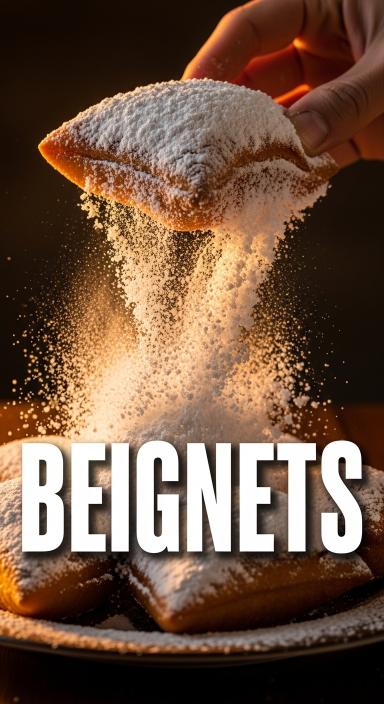
Don’t forget the finishing touch—powdered sugar. This is what gives beignets their iconic look and sweet flavor. Using high-quality powdered sugar ensures a smooth, even dusting that melts in your mouth.
Essential Kitchen Equipment and Stand Mixer Tips
Having the right tools makes the process much easier. A stand mixer is a game-changer for mixing and kneading the dough. It saves time and ensures consistency. If you don’t have one, a sturdy mixing bowl and a bit of elbow grease will work too.
Other essentials include measuring cups and spoons for accuracy. Precise measurements are key to achieving the perfect texture. Finally, a deep fryer or heavy-bottomed pot is necessary for frying the dough to golden perfection.
With these ingredients and tools, you’re well on your way to creating beignets that rival those from New Orleans. Let’s move on to the next step and dive into the history behind this beloved treat.
The History and Tradition Behind Beignets
The story of beignets is a journey through time and culture. Originating in France as “Boules de Berlin,” these fried dough treats traveled to New Orleans with French settlers. Over time, they evolved into the square, airy fritters we know and love today. This transformation is a testament to how food adapts to new environments and traditions.
One fascinating fact is that beignets became a staple in New Orleans due to their simplicity and versatility. They were easy to make with local ingredients and quickly became a favorite among locals. Today, they’re synonymous with the city’s vibrant culture and culinary heritage.
Beignets vs Doughnuts: A Cultural Comparison
While both are fried dough treats, beignets and doughnuts have distinct differences. Beignets are typically square, light, and dusted with powdered sugar. Doughnuts, on the other hand, are often round, glazed, or filled. The preparation methods also vary—beignets use a yeast-based dough, while doughnuts often rely on baking powder or baking soda.
| Aspect | Beignets | Doughnuts |
|---|---|---|
| Shape | Square | Round |
| Topping | Powdered Sugar | Glaze or Fillings |
| Dough | Yeast-Based | Baking Powder/Soda |
Another interesting fact is that beignets are deeply tied to New Orleans’ French Quarter, while doughnuts have a more widespread, global presence. This cultural contrast highlights how regional traditions shape food.
New Orleans and Café du Monde Inspirations
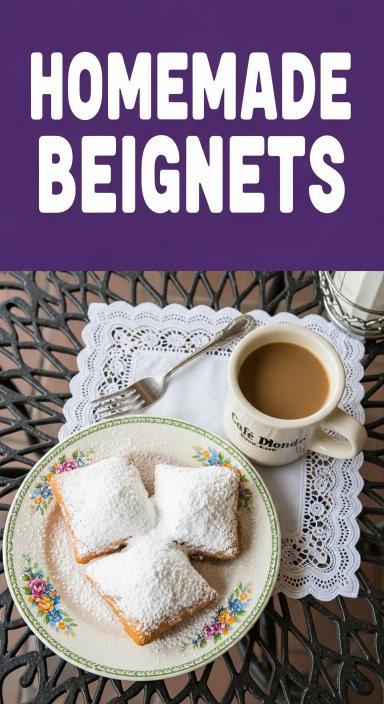
No discussion of beignets is complete without mentioning Café du Monde. Established in 1862, this iconic café has become a symbol of New Orleans’ culinary identity. Their beignets, served with café au lait, have delighted generations of locals and visitors alike.
“Café du Monde is more than a café; it’s a cultural institution.”
One lesser-known fact is that Café du Monde operates 24 hours a day, making it a go-to spot for late-night cravings or early morning treats. This accessibility has cemented its place in the hearts of many.
Reflecting on this history, I’ve drawn inspiration from traditional recipes to create my own version of beignets. By honoring the past, I hope to bring a piece of New Orleans’ magic into every bite.

Step-by-Step beignets Recipe
Let’s dive into the process of making these golden delights step by step. With a little patience and attention to detail, you’ll have a batch of fluffy, sugar-dusted treats ready to enjoy.
Preparing the Dough and Blooming the Yeast
Start by blooming the yeast. Warm your milk to about 110°F—this is the ideal temperature to activate the yeast. Add a pinch of sugar to the milk, then sprinkle the yeast over it. Let it sit for 5-10 minutes until it becomes frothy.
In a large bowl, combine the flour, sugar, and salt. Make a well in the center and add the yeast mixture, egg, and melted butter. Mix until a soft dough forms. If using a stand mixer, knead for about 5 minutes. Otherwise, knead by hand for 8-10 minutes until smooth and elastic.
Place the dough in a greased bowl, cover it with a clean towel, and let it rise for 1-2 hours or until doubled in size.
Frying to Golden Perfection and Dusting with Powdered Sugar
Once the dough has risen, roll it out on a floured surface to about ¼-inch thickness. Cut it into rectangles or squares, depending on your preference.
Heat your oil in a deep fryer or heavy-bottomed pot to 325°F. This temperature ensures a crispy exterior without burning. Fry the pieces in batches, turning them once, until they’re golden brown—about 2-3 minutes per side.
Remove the fried pieces and let them drain on a paper towel-lined plate. While they’re still warm, dust them generously with powdered sugar. This is the perfect time to add the finishing touch for that classic look and sweet flavor.
| Step | Key Details |
|---|---|
| Blooming Yeast | Warm milk to 110°F, add sugar and yeast, let froth. |
| Mixing Dough | Combine ingredients, knead until smooth, let rise. |
| Frying | Heat oil to 325°F, fry until golden brown. |
| Finishing | Dust with powdered sugar while warm. |

Time Saving Tips and Advance Preparation Techniques
Preparing these treats doesn’t have to be time-consuming—here’s how to streamline the process. With a few smart strategies, you can enjoy fresh, fluffy delights without spending hours in the kitchen. Let’s explore some time-saving techniques that make this process easier and more efficient.
Make-Ahead Dough Preparation and Overnight Rise
One of the best ways to save time is by preparing the dough ahead. After mixing and kneading, place the dough in a greased bowl, cover it with a clean towel, and let it rise in the fridge overnight. This slow rise enhances flavor and texture.
When you’re ready to cook, take the dough out and let it come to room temperature for about an hour. This step ensures the dough is easy to work with and fries evenly. Roll it out on a floured surface and cut it into uniform squares for consistent results.
Quick Reheating and Serving Strategies
If you’ve made a large batch, reheating is simple. Place the treats in a preheated oven at 350°F for 5-7 minutes. This method preserves their crispiness without drying them out. Alternatively, use a toaster oven for smaller amounts.
For serving, set up a safe frying station using a heavy-bottomed pot and a cooling rack. This setup ensures even frying and prevents oil splatters. Dust the warm treats with powdered sugar just before serving for the best flavor.
| Step | Time-Saving Tip |
|---|---|
| Dough Prep | Prepare dough ahead, refrigerate overnight. |
| Reheating | Use oven or toaster oven for quick warming. |
| Frying Setup | Use a heavy pot and cooling rack for safety. |
| Serving | Dust with sugar just before serving. |

Nutritional Facts and Serving Suggestions
Understanding the nutritional value of your favorite treats can make indulging even more enjoyable. Knowing what’s in your food helps you make informed choices without sacrificing flavor. Let’s break down the nutrition facts and explore how to serve these delights perfectly.
Understanding the Nutrition Facts and Daily Value
Each treat contains a mix of calories, protein, and fat. Here’s a quick guide to interpreting the nutrition facts:
- Calories: Provides energy, but moderation is key.
- Protein: Helps with muscle repair and growth.
- Fat: Adds richness but should be consumed in balance.
- Salt: Enhances flavor but watch your daily intake.
The daily value percentages on labels help you understand how each nutrient fits into your overall diet. For example, a treat with 10% of your daily fat intake means you’ll want to balance it with lower-fat foods throughout the day.
Perfect Pairings: Coffee and Beyond
These treats are best enjoyed with a cup of coffee, just like the classic pairing at Café du Monde. The bitterness of the coffee balances the sweetness, creating a harmonious flavor experience.
Here are some other creative ways to serve them:
- Pair with hot chocolate for a cozy treat.
- Serve with fresh fruit for a refreshing twist.
- Add a dollop of whipped cream for extra indulgence.
Enjoying these treats at home can be part of a balanced lifestyle when served in moderation. Whether it’s breakfast or dessert, these pairings elevate the experience.
| Nutrient | Amount per Serving | Daily Value (%) |
|---|---|---|
| Calories | 250 | 12% |
| Protein | 4g | 8% |
| Fat | 12g | 18% |
| Salt | 200mg | 9% |
Additional Flavor Enhancements and Variations
Experimenting with ingredients can transform a classic treat into something extraordinary. Adding a personal touch to your dough allows you to create unique flavors while keeping the traditional texture intact. Let’s explore some simple yet impactful ways to customize your recipe.
Optional Ingredients for Extra Flavor
For a subtle twist, try adding a teaspoon of vanilla extract or a pinch of cinnamon to the dough. These small additions can enhance the flavor without overpowering the classic taste. If you’re feeling adventurous, a tablespoon of citrus zest can bring a refreshing tang.
Adjusting the dough consistency is another way to experiment. Adding a splash of water can make the dough lighter, while using different types of butter—like salted or unsalted—can alter the richness. These tweaks are easy to incorporate and can make a big difference.
Exploring Alternative Serving Ideas
Beyond the traditional powdered sugar dusting, there are endless ways to serve your creations. Pair them with a drizzle of chocolate sauce or a dollop of whipped cream for extra indulgence. Fresh fruit or a light glaze can also add a refreshing contrast.
For a savory twist, try serving them with a side of honey butter or a sprinkle of sea salt. These variations allow you to enjoy the treat in new and exciting ways. Don’t be afraid to stand out and create your unique twist on this classic recipe.
Conclusion
Bringing the flavors of New Orleans into your kitchen has never been easier. With a stand mixer and a few simple ingredients, you can recreate the magic of Café du Monde right at home. This recipe blends tradition with modern convenience, making it accessible for everyone.
From the light, airy dough to the golden finish, each step is designed to deliver that iconic taste. The cultural significance of this treat ties it to the heart of New Orleans, making it more than just a snack—it’s a piece of history.
Feel free to experiment with flavors and techniques. Whether you’re using a mixer or kneading by hand, the care you put into the process is what makes it special. Share your creations and inspire others to try their hand at this timeless classic.
Enjoy the experience and spread the joy of freshly made treats. After all, the best part of cooking is sharing it with those you love.